T-Scoop
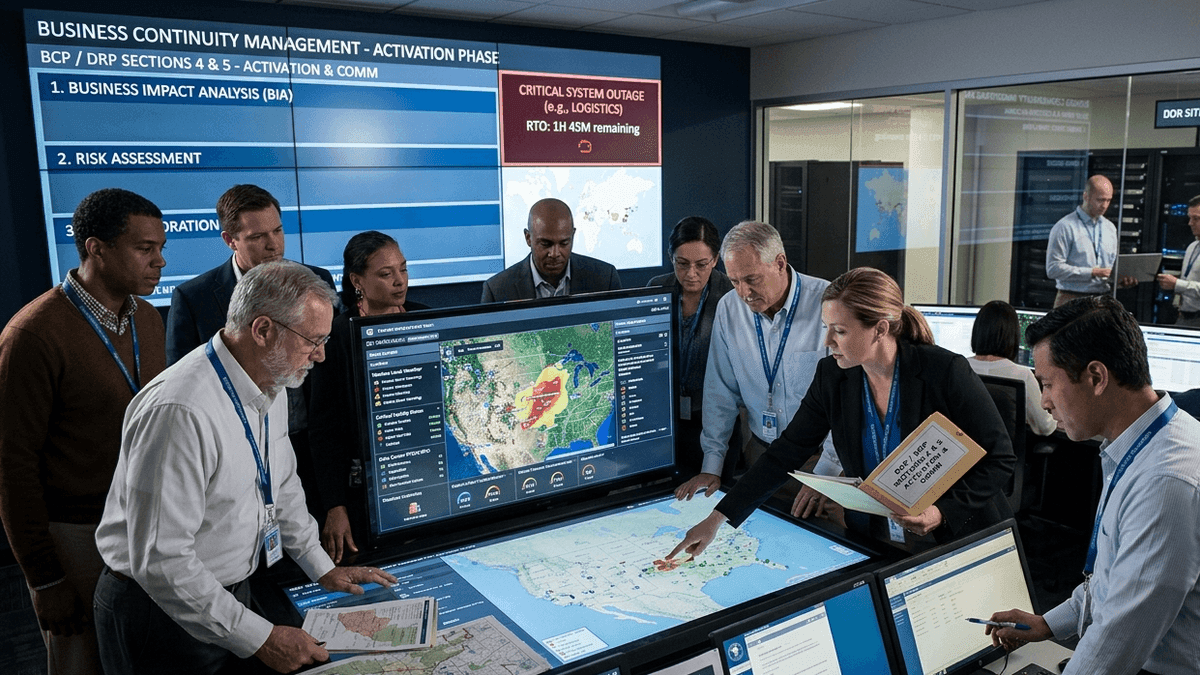
Business Continuity: The Organizational Journey in Facing Disasters Every year, organizations regardless of size or sector are exposed to countless risks ranging from natural disasters and major technical failures to cyberattacks and even pandemic crises. In all these situations, organizations must maintain business operations during disruptive events. A critical part of this challenge lies in overcoming and recovering from operational system failures, which may halt sales, operations, production, and logistics. Whether disruptions stem from human actions, software errors, harsh weather, or natural disasters, organizations need well-planned operational and technical strategies to navigate crises while safeguarding critical functions and then recovering quickly to resume normal operations. This ability to withstand disruptions and maintain vital processes is known as Business Continuity (BC). Business continuity is not merely a complementary measure it is a strategic investment that ensures organizational survival and protects reputation and market value. Business Continuity (BC) is the capability to ensure that essential business functions continue without interruption or can be restored quickly within an acceptable time frame following a catastrophic incident or disruption. It is a comprehensive methodology focused on the resilience of the entire organization including people, processes, resources, facilities, and technology. At the heart of this concept is the Business Continuity Management System (BCMS), aligned with the international standard ISO 22301, which provides an integrated framework to ensure continuity of critical operations during and after crises. This global standard helps organizations identify potential threats, assess their impact, and develop effective plans to manage crises and ensure continuity of essential services and activities. The system goes beyond risk management; it establishes a comprehensive methodology for preparedness, response, and recovery enabling organizations to continue operations with minimal losses and achieve rapid recovery. Risk analysis also plays a fundamental role in business continuity. It involves collecting data, assessing potential risks, and determining risk levels to evaluate the likelihood and impact of future disruptions. This structured approach equips organizations to anticipate challenges and implement appropriate mitigation measures. Key Principles of a BCMS (ISO 22301) A Business Continuity Management System emphasizes the importance of: - Establishing business continuity policies and objectives aligned with organizational goals. - Operating and maintaining processes, capabilities, and response structures that ensure organizational resilience. - Monitoring and reviewing the performance and effectiveness of the BCMS. - Continuous improvement based on quantitative and qualitative evaluations. Business Continuity Plan (BCP) A Business Continuity Plan is a documented set of procedures that guide the organization in responding, recovering, and resuming operations to a predetermined level after a disruption. Steps for Developing a Business Continuity Plan (BCP) An effective BCP is built on a systematic approach consisting of several key phases: 1. Business Impact Analysis (BIA) This foundational step identifies all processes and functions within the organization and assesses the impact of their interruption on revenue, reputation, and legal obligations. Key outcomes include: Identifying critical processes: Which functions must continue at all costs? Determining recovery requirements, specifically: - Recovery Time Objective (RTO): Maximum allowable downtime for a critical process. - Recovery Point Objective (RPO): Maximum acceptable data loss before resuming operations. 2. Risk Assessment Identifying potential risks affecting operations (e.g., server failure, fire, prolonged power outage, cyberattack) and evaluating their likelihood and impact. 3. Developing Continuity Strategies Based on BIA and risk assessment results, strategies are created for each scenario: - IT Strategies: Data backup, hot/cold recovery sites, alternative cloud services. - Human Resources Strategies: Crisis communication, alternate chains of command, remote work arrangements. - Facilities and Location Strategies: Alternative work sites or emergency office spaces. 4. Plan Documentation The plan must be a clear procedural guide for crisis situations and should include: - Emergency contact lists for leadership, response teams, and key suppliers - Immediate response procedures - Detailed steps for restoring critical operations, with assigned responsibilities 5. Testing and Maintenance A BCP is not a static document. It must be regularly tested (e.g., simulations) to assess recovery strategies, identify gaps, and remain updated with organizational and technological changes. Purpose of Conducting a Business Impact Analysis (BIA) The aim of a BIA is to help the organization identify its continuity requirements and priorities. The process includes: - Defining impact types and criteria relevant to the organization - Identifying key activities, products, and services and prioritizing them - Evaluating impacts of activity disruptions over time - Determining the Maximum Tolerable Period of Disruption (MTPD) - Identifying the expected RTO to resume activities at an acceptable level - Identifying the resources required - Determining internal and external dependencies supporting priority activities Business Continuity and Disaster Recovery (BCDR) BCDR is a set of strategies, policies, and procedures that help the organization respond, adapt, continue operations, and recover after a disruptive event. Business Continuity: Maintaining normal operations under adverse conditions Disaster Recovery: Restoring technology and systems as quickly as possible Both are essential to ensure uninterrupted operations. Organizations face a range of inevitable disruptive events. However, a well implemented BCDR plan ensures continuity regardless of the interruption be it power outages, IT failures, natural disasters, or supply chain disruptions. Why Is BCDR Important? BCDR helps organizations prepare for unexpected risks that could affect operations. It identifies all necessary actions during critical events and outlines precautions to reduce risk. Its core purpose is to minimize the impact of disruptions, ensure smooth workflow, reduce downtime, and aid quick recovery. It also protects employees and assets and ensures operational capability under any conditions. Relationship Between BCP and DRP BCP and DRP are often confused, but their relationship is “whole vs. part.” Summary of the Relationship: - BCP is the broader umbrella: It defines what needs to be restored, when (RTO), who is involved, and where work will continue. - DRP is the technical tool: It ensures the IT infrastructure required for critical operations is restored and available. - DRP cannot succeed without BCP: Restoring servers is pointless if BCP does not specify who will use them or where operations will resume. Practical Examples of Business Continuity Strategies Strategies vary across sectors. For example: - Operational Emergency Model (Manufacturing & Supply Chains) Example: A factory or major manufacturing company. Challenge: Keeping production lines running despite logistical issues, equipment failure, or onsite disasters. Continuity Model: Focused on operational and logistical risk management. Conclusion Developing a business continuity plan is not a one-time project it is an ongoing commitment requiring regular review and updates. In a world where threats are increasingly complex, a well-designed and thoroughly tested plan is the first line of defense. It transforms potential disasters from existential threats into manageable, temporary disruptions. Further Reading: - Guide for Making Acute Risk Decisions - Managing SMEs in Times of Rapid Change, Uncertainty, and Disruption - ISO 22301:2019 – Business Continuity Management Systems - Always On Business: Aligning Enterprise Strategies and IT in the Digital Age

Copyright © 2025, takamol-eg. All rights reserved.